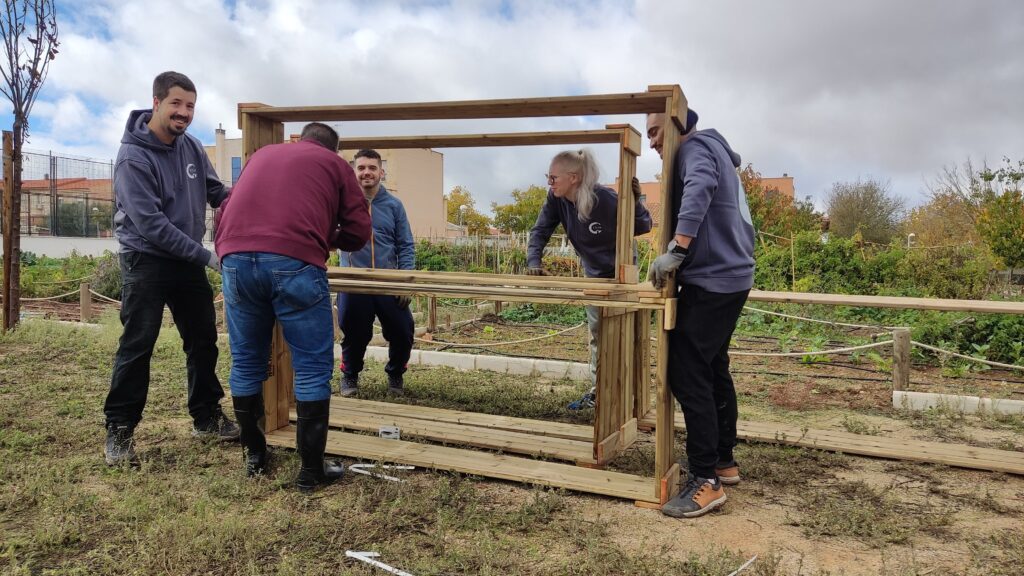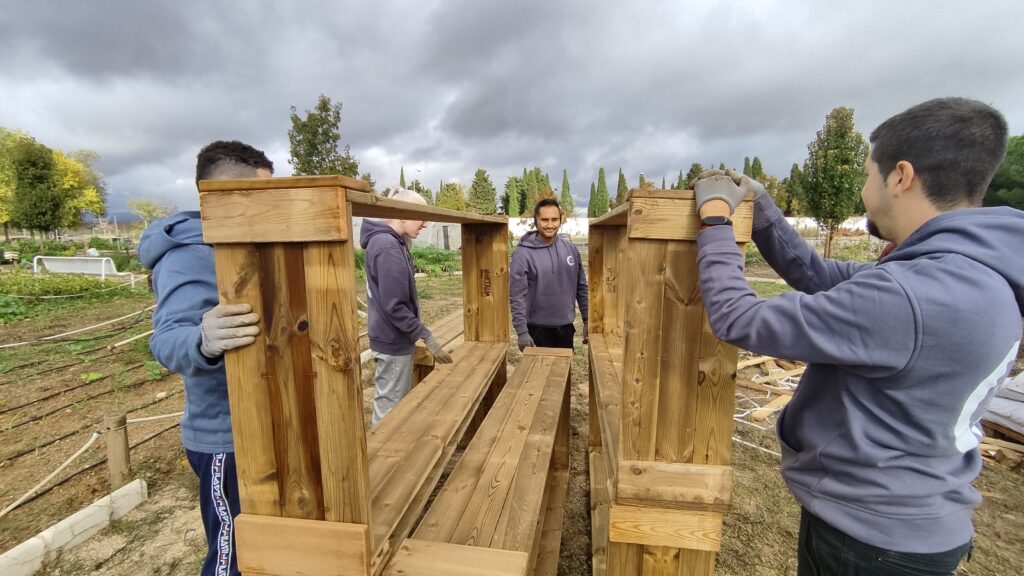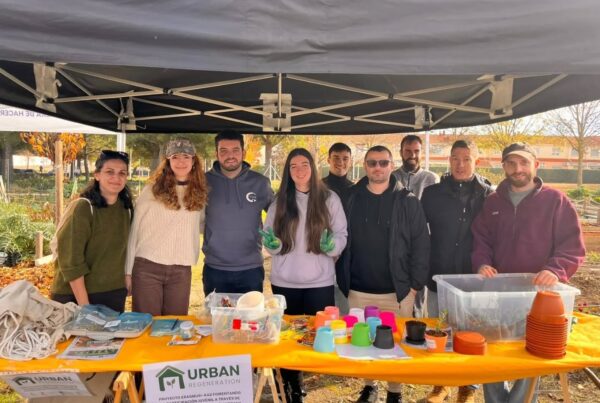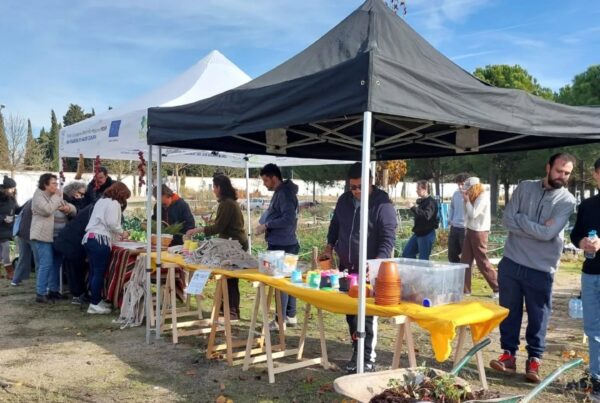


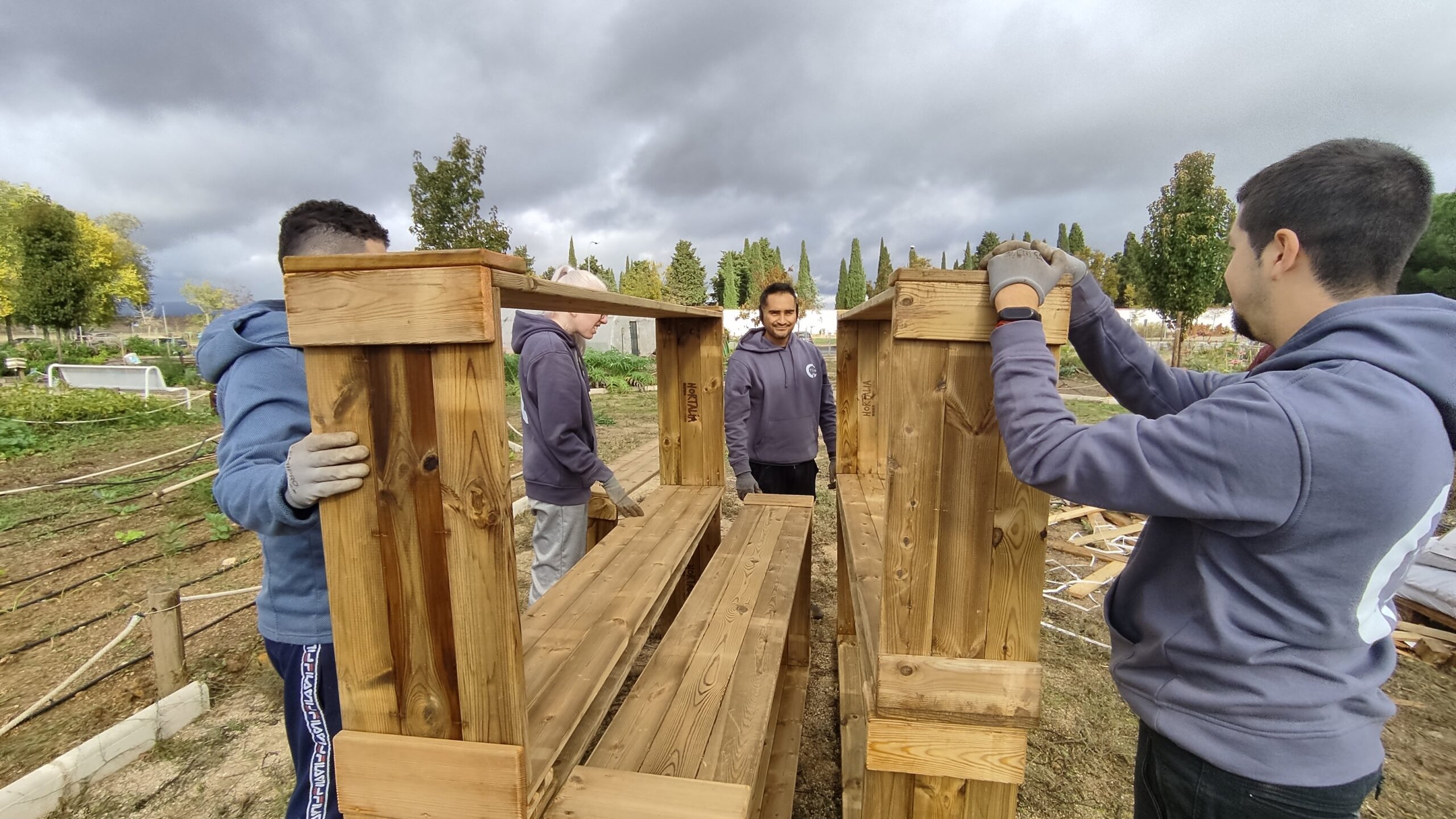
As part of the project’s practical phase, Asociación Tilia carried out three urban regeneration actions, the main one taking place in the municipal urban garden, in the plot managed by the association. The objective was to introduce more sustainable gardening methods and raise awareness among the other associations and over 60 individuals and families participating in the two urban gardens of Ciudad Real, as well as among members of the public who take part in our activities in the urban garden during and after the project.
Main Regeneration: Raised Beds for Sustainable Cultivation
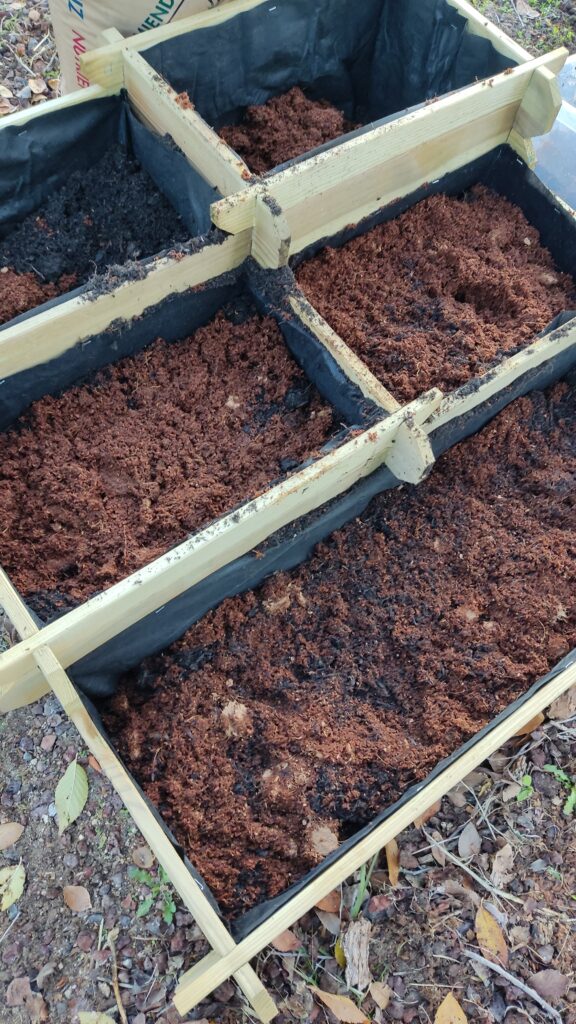
The central action consisted of building raised cultivation beds designed to promote environmentally responsible practices, structured around two main principles:
1. Reuse of materials and waste reduction.
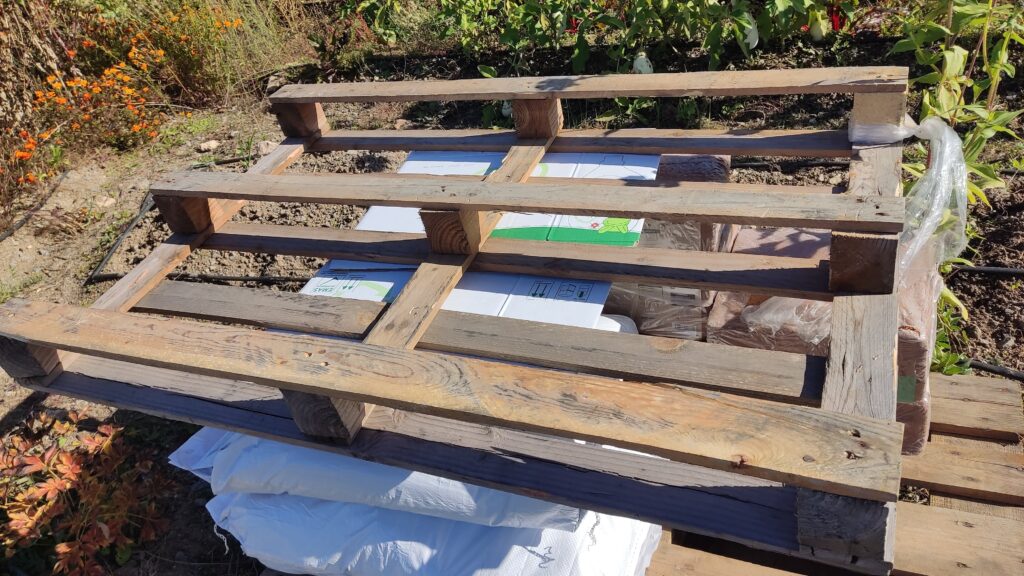
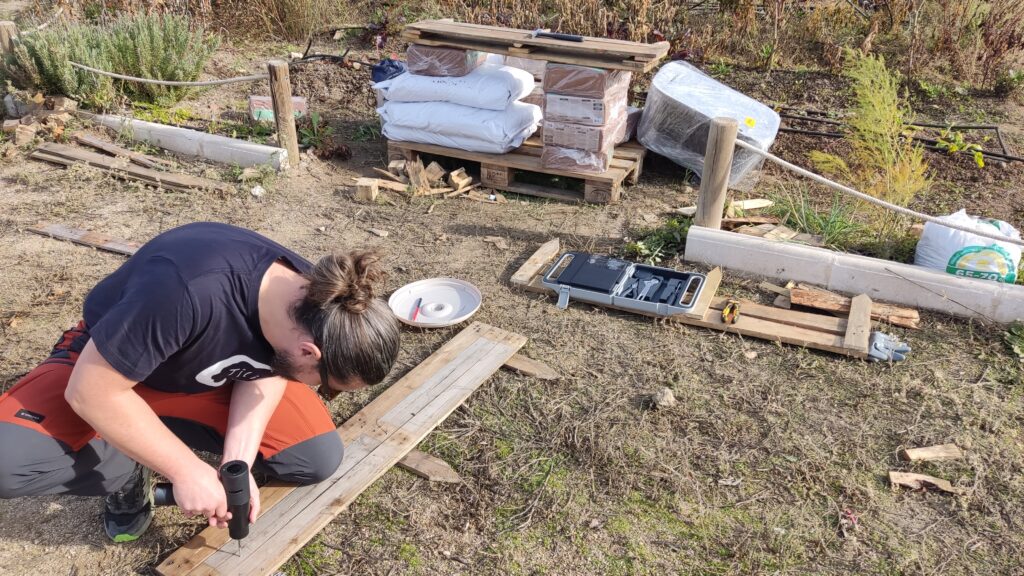
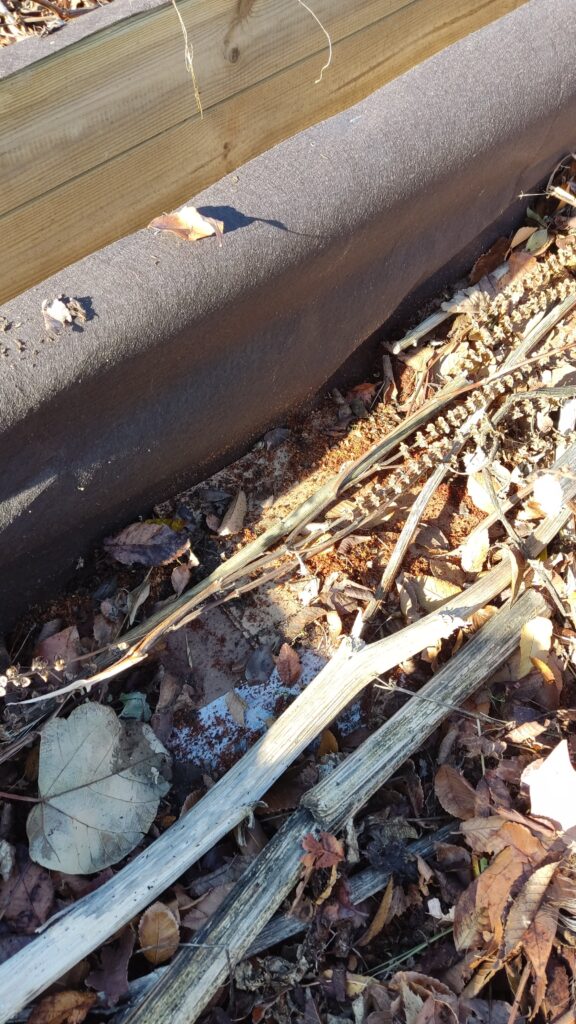
Old wooden pallets were reused to build part of the raised beds. The interior was prepared using a layered composting method: cardboard from packaging, organic kitchen waste collected by the team, remains of old plants from the garden, dry leaves, and wood chips from trees in the streets and parks of Ciudad Real (provided by the municipality). These layers were topped with humus and straw, creating fertile cultivation spaces that retain moisture and nutrients efficiently while giving new life to materials that would otherwise be discarded.
2. Reduction of water consumption.
By creating nutrient-rich raised beds that conserve humidity, the need for irrigation is significantly reduced. This is particularly important in a dry region such as Ciudad Real, where water scarcity has become increasingly severe in recent years due to climate change. Through this intervention, we aim not only to reduce water use in our own plot but also to inspire others to adopt similar sustainable techniques.
Two Mini Urban Gardens in Public Spaces
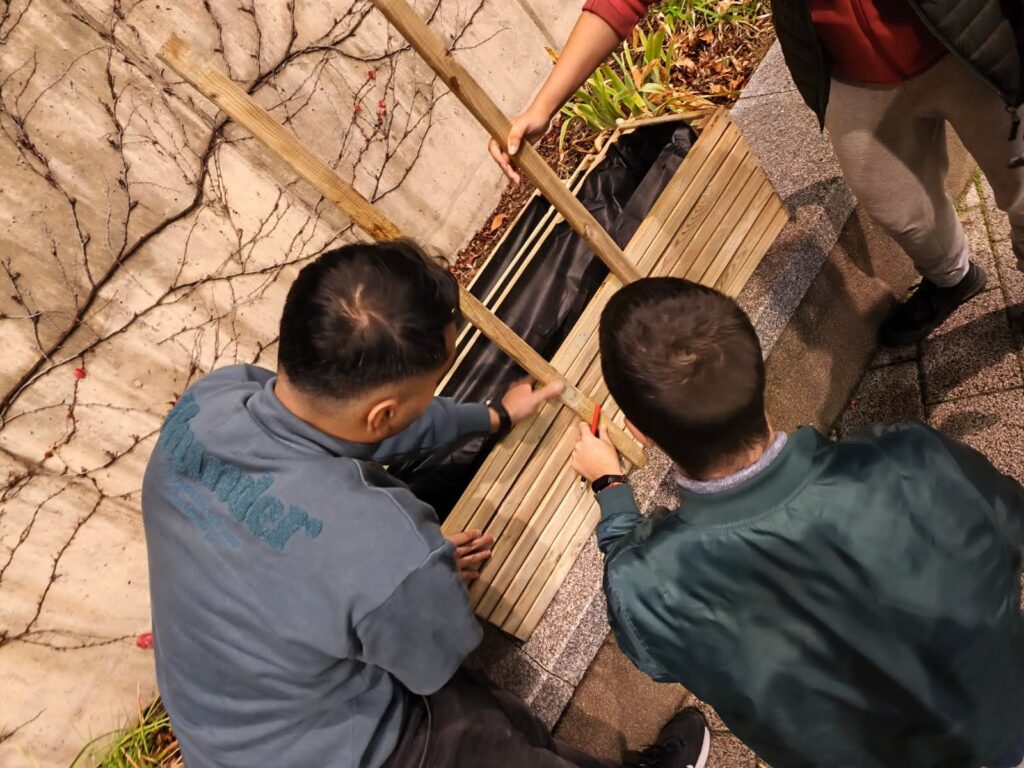
In addition to the main regeneration, two smaller interventions were implemented by creating mini urban garden beds at the Espacio Joven Ciudad Real (municipal youth centre) and the Universidad Popular de Ciudad Real. In these spaces, herbs, strawberries and flowers were planted — species that require little maintenance and can be easily sustained by the people who use and manage these spaces.
These mini gardens are intended to serve as long-term educational resources, supporting future workshops and activities aimed at children, youth and adults, promoting urban gardening and encouraging people to cultivate part of their own food at home.