

As part of the Urban Regeneration process, Asociación Tilia launched a participatory mapping phase to identify priority areas for intervention based directly on citizens’ ideas and concerns.
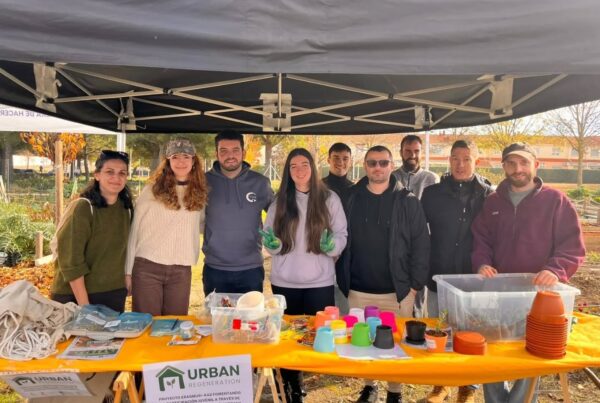
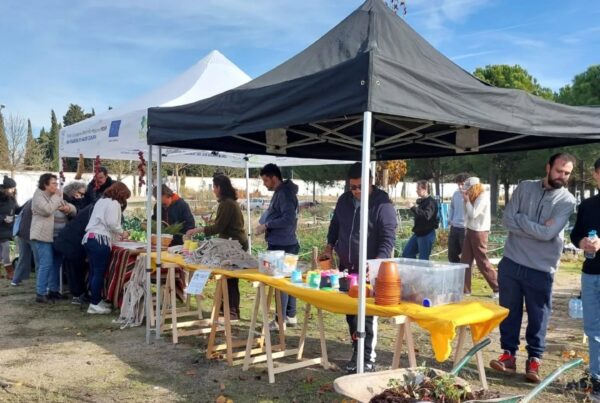
The first step took place on 24 May during the local Associations Fair, where over 75 associations were present. At our stand, we installed a “UR Proposal Box” and a large city map, inviting citizens to point out specific places in Ciudad Real that could benefit from regeneration. Participants briefly described the issues affecting those spaces and suggested possible improvements, helping us better understand local needs and expectations.
The proposal box was also present at the youth festival Encuentro Joven, where we set up a stand to provide information about the project to members of the public, more than 50 associations and representatives of the Municipality of Ciudad Real. During the event, we continued collecting needs and proposals for regeneration spaces in the city, further broadening community participation.
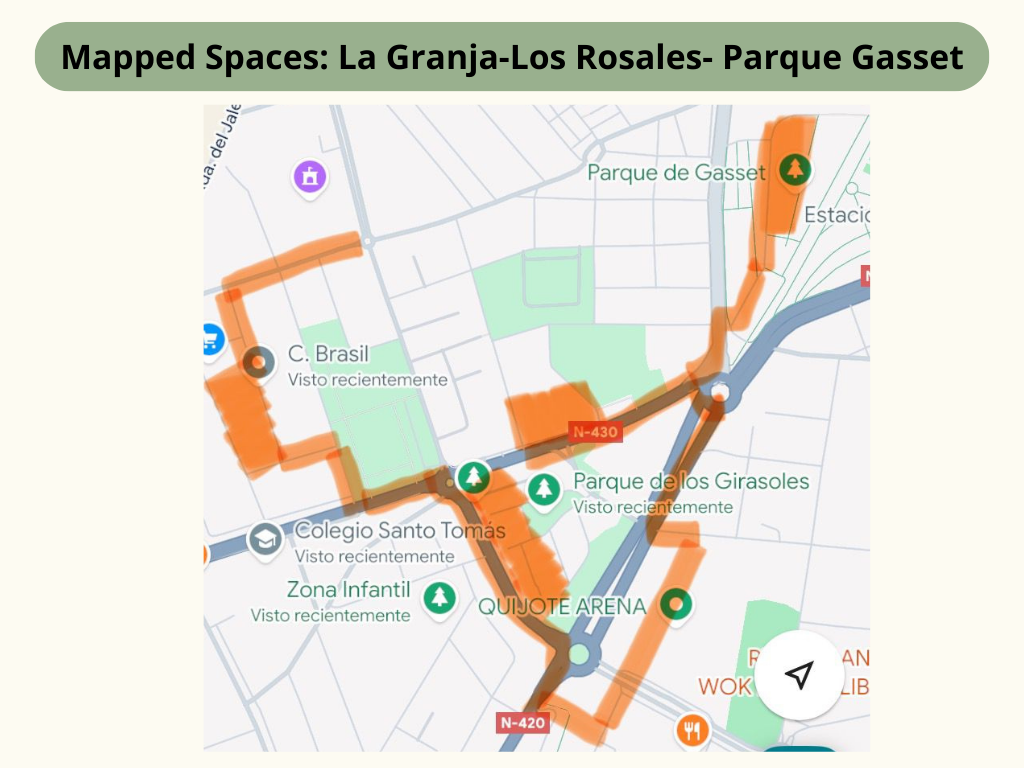
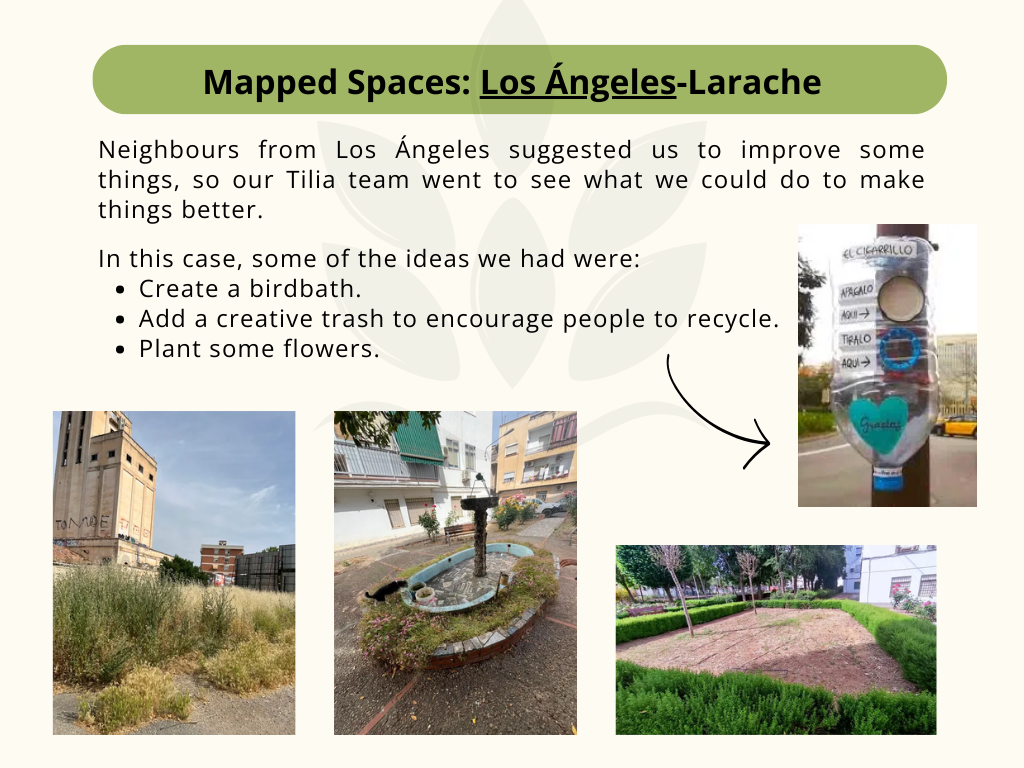
Based on the collected proposals, two mapping photo-walk workshops were organised on 1 and 12 June, focusing on selected areas highlighted by residents: La Granja–Los Rosales–Parque Gasset and Los Ángeles–Larache
During these visits, participants observed the spaces, documented challenges and explored creative, low-cost and sustainable solutions. The municipal urban garden was also visited as part of the workshop and included among the mapped spaces, serving as both inspiration and a potential site for further regeneration activities.
In La Granja and Los Rosales, ideas included creating gardens with aromatic plants and flowers, installing recycled plant pots, organising graffiti contests and improving shaded areas with benches or picnic tables
In Parque Gasset, the team identified inspiring elements such as insect houses, bird fountains and second-hand libraries that could be replicated in other neighbourhoods
In the Los Ángeles and Larache areas, proposals focused on installing birdbaths, adding creative recycling bins, planting flowers and developing picnic areas or small urban gardens
During the visits, the team also identified nearby municipal spaces such as the Espacio Joven Ciudad Real and the Universidad Popular de Ciudad Real as potential locations where some of the regeneration ideas could be implemented, sustainably maintained and further used for future educational and community activities.
All ideas and observations were compiled in a shared digital Padlet document, creating an open and collaborative collection of urban regeneration proposals for Ciudad Real.
This participatory process strengthened dialogue between young people and the wider community and helped define concrete spaces for future action.